What is abrasion resistance of coatings?
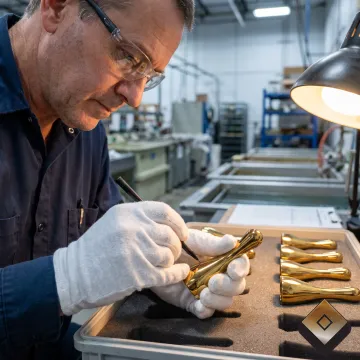
Abrasion resistance refers to a coating's ability to withstand mechanical wear from rubbing, scraping, or friction without degrading or showing visible damage. High-quality abrasion resistant coatings like our UV and PVD systems create super-hard surface layers that maintain their appearance and protective properties even under repeated contact. This resistance is measured through standardized testing and is critical for products that experience handling during packaging, assembly, consumer use, or harsh operating environments. Our coatings are specifically engineered to provide jewelry-quality durability.
What is anti-abrasion coating?
Anti-abrasion coating is a protective finish applied to substrates to prevent surface wear, scratching, and scuffing. Our anti-abrasion systems include ultraviolet-cured topcoats with instantaneous cure and advanced PVD methods like Titanium Nitride that create extremely hard, chemically resistant surfaces. These coatings bond at the molecular level to plastic, metal, or glass substrates, providing long-lasting protection that maintains flawless appearance throughout the product lifecycle. We offer proprietary formulations approved by global cosmetic brands and engineered for high-volume industrial applications.
Which industries benefit most from abrasion resistant coatings?
Cosmetic packaging, automotive components, electronic devices, medical equipment, plumbing fixtures, and architectural hardware all benefit significantly from abrasion resistant coatings. Any product that experiences frequent handling, environmental exposure, or mechanical stress requires protective finishing. Our coatings are particularly valuable in the cosmetic industry where flawless appearance is essential, and in industrial applications where durability directly impacts product longevity. With approved supplier status from Estée Lauder, L'Oreal, Avon, and Elizabeth Arden, we deliver proven protection across diverse markets.
How long does the coating application process take?
Our UV coating systems feature instantaneous cure, significantly reducing process time compared to traditional methods. For prototype and sampling work, we offer half the normal industry lead times thanks to our in-house custom tooling design and build capabilities. Production runs benefit from our 24-5 operational schedule and high-volume capacity—we process over one million parts per week across 200,000+ sq.ft. of facility space. Specific timelines depend on part complexity, substrate material, finish requirements, and order volume. Free sampling services help establish accurate production schedules.
Can abrasion resistant coatings be applied to plastic substrates?
Yes, we specialize in applying super-hard abrasion resistant coatings to plastic substrates including ABS, Polypropylene, Polycarbonate, Ultem, Nylon, LCP, and other engineering-grade plastics. Our proprietary systems include advanced pre-treatment techniques and plasma treatment developed specifically for hard-to-adhere-to materials, ensuring flawless adhesion without weakening or embrittling parts. This capability is critical for applications requiring proper flex and springback while maintaining scratch and chemical resistance. We've pioneered the most consistent and flexible plating-on-plastic line in the industry with over 30 different finish options.
What makes your UV coating systems superior for scratch resistance?
Our UV coating systems deliver super-hard, chemically resistant surfaces with instantaneous cure, creating durable protection that matches the cosmetic industry's requirement for flawless finishes at high speed. The proprietary topcoat formulation prevents scuffing and scratching during bulk packaging, assembly, and consumer use—a critical advantage for products experiencing repeated handling. These systems have earned approval from global brands including Estée Lauder, L'Oreal, Avon, and Elizabeth Arden. The technology allows easy application of cast logos while maintaining fragrance resistance, making it ideal for cosmetic closures, caps, and collars.
Do you offer testing and sampling before full production?
Yes, we provide free sampling services for most customers and applications to validate coating performance before committing to production volumes. Our in-house custom tooling design and build capability enables amazingly responsive service, moving parts from sampling to production in half the normal lead times. During the sampling phase, we conduct adhesion testing, durability assessment, and finish validation to ensure the coating system meets your specific requirements. This approach minimizes risk and optimizes coating selection for your application's unique demands, whether cosmetic packaging or industrial components.
What is the difference between UV coating and PVD coating methods?
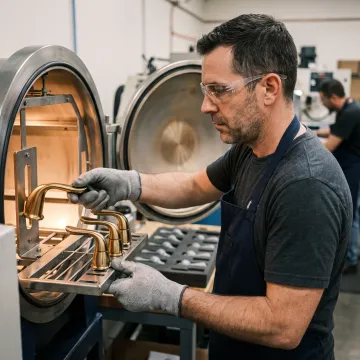
UV coating uses ultraviolet light to instantly cure liquid coating formulations, creating super-hard, chemically resistant surfaces ideal for cosmetic packaging and high-touch components. PVD (Physical Vapor Deposition) methods like magnetron sputtering deposit materials such as Titanium Nitride or Zirconium Nitride at the atomic level, producing extremely hard, wear-resistant coatings on engineered plastics and metals. UV systems excel in high-speed cosmetic applications requiring jewelry-quality finishes, while PVD methods provide superior hardness for industrial components facing extreme wear. We select the optimal method based on substrate material, performance requirements, and application environment.