What is electroless nickel plating and when should I use it?
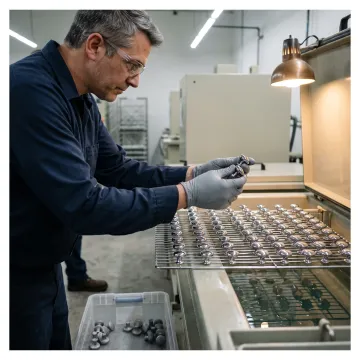
Electroless nickel plating is an autocatalytic chemical process that deposits a uniform nickel-phosphorus alloy coating without using electrical current. This process provides excellent corrosion resistance, wear resistance, and uniform thickness even on complex geometries with recesses and internal surfaces. It's ideal for electronic components, medical devices, plumbing fixtures, and hardware applications where consistent coating thickness and superior protection are critical. Unlike electrolytic plating, electroless nickel doesn't require rack positioning considerations and provides uniform coverage on parts with irregular shapes or blind holes.
Can you match metal finishes on plastic components?
Yes, our advanced plating-on-plastic systems can produce any finish on plastic that we create on metal substrates. We've developed the most consistent and flexible plating-on-plastic line in the industry with over 30 different finish options including gold, chrome, brushed stainless, satin nickel, antique brass, and oil-rubbed bronze. This capability is especially valuable for electronic, medical, plumbing, and hardware applications where matching finishes across metal and plastic components is critical for aesthetic consistency. We can plate on most engineering grades including Ultem, Nylon, Polycarbonate, LCP, and standard materials like ABS and Polypropylene.
What industries do you serve with metal plating services?
We serve a diverse range of industries including cosmetics and personal care (as an approved supplier for Estée Lauder, L'Oreal, Avon, and Elizabeth Arden), electronic manufacturing, medical device production, plumbing and hardware, automotive components, architectural finishing, jewelry manufacturing, lamp and lighting, and specialty applications like liquor bottles and tableware. Our 200,000+ sq.ft. facility handles high-volume industrial finishing with the precision and consistency required by regulated industries, while maintaining the artistic quality demanded by luxury consumer brands. Each industry benefits from our 60+ years of finishing expertise and innovation-first approach.
How long does the plating process take from sample to production?
We're known for amazingly responsive service with the ability to move parts from sampling to production in half the normal lead times—typically weeks faster than industry standard. Our separate custom tooling design and build company adds capacity and efficiency to the process, eliminating external tooling delays. For most customers and applications, we offer free sampling services to validate finish quality, adhesion, and durability before full production. Once approved, our 24-5 working hours and high-volume systems allow us to process trailer loads of material daily, with capability to run over a million parts per week across 20+ different jobs simultaneously.
What types of nickel finishes are available?
We offer multiple nickel finish options including electroless nickel for uniform corrosion and wear resistance, satin nickel for a soft matte appearance popular in architectural applications, brushed nickel that mimics brushed stainless steel, bright nickel for decorative applications, and antique nickel for vintage or heritage looks. Each finish serves different functional and aesthetic purposes—electroless nickel excels in engineering applications requiring hardness and corrosion resistance, while decorative nickel finishes are ideal for hardware, plumbing fixtures, and consumer products. We can also combine nickel with other finishes in multi-layer systems for enhanced durability or specific appearance requirements.
Do you provide ROHS compliant plating and metallizing?
Yes, all our metallizing and plating processes are available in ROHS compliant formulations. This is especially important for electronic components, consumer products sold in regulated markets, and medical devices that must meet strict material compliance standards. Our ROHS compliant systems maintain the same brilliant finishes, superior adhesion, and durability as traditional processes while meeting restrictions on hazardous substances including lead, mercury, cadmium, and hexavalent chromium. We provide documentation and certification to support your compliance requirements for both domestic and international markets.
What is the difference between electroplating and vacuum metallizing?
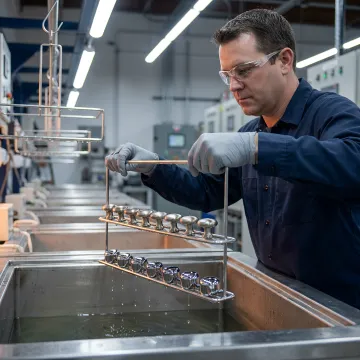
Electroplating uses electrical current to deposit metal ions onto conductive surfaces in an electrolyte solution, creating durable functional and decorative finishes with excellent adhesion and uniform thickness control. Vacuum metallizing uses thermal evaporation in a vacuum chamber to deposit a thin layer of vaporized metal (typically aluminum) onto substrates, creating brilliant mirror finishes ideal for decorative applications. Electroplating is better for functional requirements like corrosion resistance, wear resistance, and electrical conductivity, while vacuum metallizing excels at creating high-luster decorative finishes on plastics and glass. We offer both processes and often combine them with basecoats, topcoats, and specialty treatments for optimal performance.
Can you handle large volume production runs?
Absolutely. Our 200,000+ sq.ft. facility is specifically designed for high-volume production with capability to process over a million parts per week and run over 20 different jobs simultaneously. We operate on 24-5 working hours and can handle trailer loads of material daily. Our flexible manufacturing systems accommodate everything from miniature complex parts to larger components for the lamp and lighting industry. Whether you need consistent runs of hundreds of thousands of identical cosmetic caps or varied batches of industrial components with different finish specifications, our world-class environment and proven processes deliver the highest quality at production speeds that meet demanding delivery schedules.