How long should you let an adhesion promoter dry?
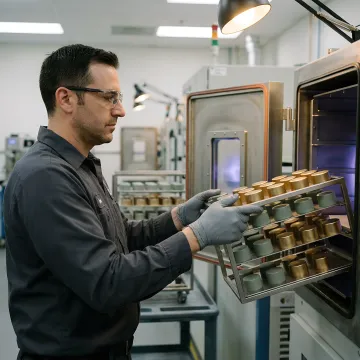
Plasma treatment provides instantaneous surface activation without traditional drying time requirements. Unlike liquid adhesion promoters that require 15-30 minutes of drying, our plasma process molecularly activates the substrate surface in seconds during the treatment cycle. Parts emerge ready for immediate coating application, significantly reducing production cycle times. The activated surface maintains optimal bonding properties for several hours post-treatment, though we recommend proceeding to coating application within the same production shift for maximum adhesion performance. This eliminates production bottlenecks associated with conventional chemical primers and adhesion promoters.
How long does plasma treatment last?
The surface activation from plasma treatment remains effective for coating adhesion for approximately 24-48 hours under normal manufacturing conditions, with optimal bonding occurring within 4-8 hours post-treatment. However, once a coating is applied to the plasma-treated surface, the bond is permanent and will not degrade over the product's lifetime. The treatment creates molecular-level changes to the substrate surface that enable superior adhesion, and this bonded coating system delivers exceptional durability through years of use, handling, and environmental exposure without delamination or failure.
What is plasma treatment for adhesive bonding?
Plasma treatment for adhesive bonding uses controlled ionized gas to molecularly activate substrate surfaces, dramatically improving coating and adhesive adhesion without chemical primers. The process bombards the material surface with high-energy ions that clean contaminants, increase surface energy, and create reactive bonding sites at the molecular level. This is particularly critical for difficult-to-bond materials like polycarbonate, polypropylene, and engineering plastics that resist conventional adhesion methods. Our proprietary plasma treatment delivers flawless coating adhesion while preserving the material's natural flex, springback, and mechanical properties—essential for functional components where performance cannot be compromised by aggressive chemical pre-treatments that can embrittle or weaken substrates.
Which materials benefit most from plasma adhesion promotion?
Plasma treatment delivers exceptional results on notoriously difficult-to-bond substrates including polycarbonate, polypropylene, HDPE, and engineering-grade plastics like Ultem, Nylon, and LCP. These materials have low surface energy and resist wetting by coatings and adhesives, making traditional adhesion promotion methods ineffective or damaging. Our plasma process is also highly effective on mixed-material assemblies, glass, metals requiring improved paint adhesion, and composite materials. The treatment is particularly valuable for medical device components, cosmetic packaging, automotive interior parts, and electronic housings where both superior finish adhesion and maintained mechanical properties are critical performance requirements.
How does plasma treatment compare to chemical adhesion promoters?
Plasma treatment offers significant advantages over chemical adhesion promoters: it's a dry, environmentally friendly process with no VOC emissions or hazardous waste disposal requirements. Unlike chemical primers that add thickness and can cause dimensional issues on precision parts, plasma treatment adds no material—it only modifies the existing surface at the molecular level. Chemical promoters can embrittle or weaken substrates, particularly on thin-walled parts, while our plasma process preserves critical mechanical properties like flex and springback. Additionally, plasma treatment provides more consistent, controllable results across complex geometries and eliminates drying time, accelerating production cycles while delivering superior long-term adhesion durability.
Can plasma treatment be integrated with existing finishing processes?
Yes, plasma treatment integrates seamlessly into existing production workflows as a pre-treatment step before metallization, electroplating, painting, or coating operations. Our facility's comprehensive finishing capabilities allow us to perform plasma treatment followed immediately by vacuum metallizing, UV coating, electroplating, or PVD processes in a single production flow. This vertical integration eliminates handling, shipping, and scheduling complications associated with outsourcing multiple finishing steps. For customers with in-house coating operations, we can provide standalone plasma treatment services with carefully controlled post-treatment handling protocols to preserve surface activation during transit. Our engineering team works directly with your production staff to optimize process integration for maximum efficiency.
What quality control measures ensure consistent plasma treatment results?
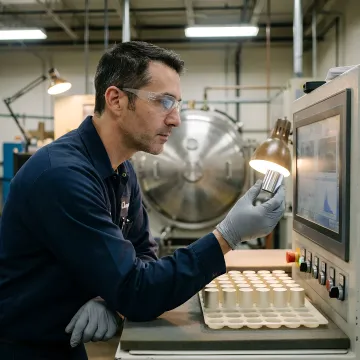
Our plasma treatment process incorporates rigorous quality control protocols including real-time monitoring of plasma chamber parameters (power, pressure, gas composition, treatment duration), systematic surface energy testing using dyne solutions or contact angle measurement, and adhesion validation through cross-hatch testing on production samples. Every treatment batch is documented with full traceability, and we maintain statistical process control charts to identify any parameter drift before it affects parts. Our quality management system, developed through over 60 years of precision finishing for demanding industries like cosmetics and medical devices, ensures every component receives optimal surface activation. Additionally, our approved supplier status with brands like Estée Lauder and L'Oreal reflects our commitment to consistency and quality.
What are typical turnaround times for plasma treatment services?
Our 24-5 operational schedule and streamlined production workflows enable significantly faster turnaround than industry standard. For standalone plasma treatment services, typical production runs are completed within 3-5 business days from receipt. When combined with our metallizing, plating, or coating services, we offer integrated finishing with turnaround approximately half of conventional lead times due to our in-house capabilities eliminating external processing delays. Rush services are available for time-critical projects, and our free sampling program allows most customers to receive treated test parts within 5-7 days for validation before committing to production runs. Our high-volume capacity—processing over a million parts weekly—means we can accommodate both prototype quantities and large production orders without extended scheduling delays.