Do I need anti-scratch coating on polycarbonate lenses?
Yes, anti-scratch coating is essential for polycarbonate lenses. While polycarbonate offers exceptional impact resistance (up to 10 times more than standard plastic), the material itself is relatively soft and prone to surface scratching. Uncoated polycarbonate lenses quickly develop fine scratches that compromise optical clarity and aesthetics. Professional scratch-resistant coatings—typically UV-cured hard coats or advanced PVD treatments—increase surface hardness significantly, providing the durability needed for safety eyewear, automotive lighting, and precision optical applications where both impact protection and scratch resistance are required.
What is the best anti-scratch coating for polycarbonate?
The best anti-scratch coating depends on your application requirements. UV-cured hard coats provide excellent scratch resistance with superior chemical resistance and are ideal for safety glasses and general optical use. For extreme durability needs, PVD coatings like Titanium Nitride (TiN) or Zirconium Nitride (ZrN) deliver the highest scratch resistance with exceptional hardness ratings. Our proprietary UV topcoat systems combine rapid cure times with superior adhesion through plasma pre-treatment, preventing coating delamination while maintaining polycarbonate's natural flex properties. We recommend sample testing to validate coating performance for your specific use case.
What coatings are used on polycarbonate lenses?
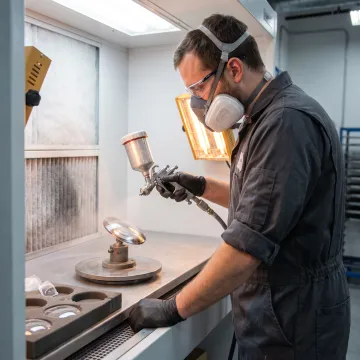
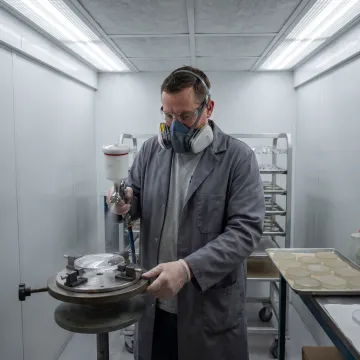
Professional polycarbonate lenses typically receive multiple coating layers: a plasma or chemical pre-treatment to promote adhesion, a basecoat for surface leveling, a hard scratch-resistant topcoat (UV-cured or thermally-cured), and often an anti-reflective coating to reduce glare. Additional specialty coatings may include hydrophobic treatments for water repellency, oleophobic coatings for smudge resistance, and UV blockers for enhanced eye protection. At Providence Metallizing, we also offer advanced PVD hard coatings (TiN, ZrN, TICN) for applications requiring maximum durability, and our ROHS-compliant formulations ensure environmental compliance for regulated industries.
How long does scratch-resistant coating last on polycarbonate lenses?
Professional scratch-resistant coatings typically last the lifetime of the lens when properly maintained. Our UV-cured topcoats are formulated for long-term durability, resisting degradation from UV exposure, cleaning chemicals, and normal handling. The coating's longevity depends on use environment—safety glasses in industrial settings may show wear after 1-2 years of daily use, while precision optical components in controlled environments can maintain coating integrity for 5-10+ years. We conduct accelerated aging tests and abrasion resistance testing to validate coating durability, and our proprietary formulations have proven performance across millions of coated parts for global manufacturers.
Can scratch-resistant coating be applied to existing polycarbonate lenses?
Applying scratch-resistant coating to previously manufactured lenses is technically challenging and generally not recommended. Effective coating requires pristine surface preparation, including plasma treatment or chemical pre-treatment, which must occur before contamination. Existing lenses may have surface oils, micro-scratches, or residual mold release agents that prevent proper coating adhesion. Additionally, handling marks or environmental exposure can compromise coating uniformity. For optimal results, scratch-resistant coatings should be applied immediately after molding or fabrication in a controlled clean environment. We offer prototype coating services to help you validate coating specifications during product development before full production.
What is the difference between hard coat and scratch-resistant coating?
The terms are often used interchangeably, but technically a hard coat refers to any coating that increases surface hardness, while scratch-resistant specifically indicates tested abrasion resistance. Professional scratch-resistant coatings for polycarbonate are hard coats—typically UV-cured or thermally-cured polymers that form a harder surface layer than the polycarbonate substrate itself. At Providence Metallizing, our UV hard coats are formulated not just for hardness but also for chemical resistance, flexibility, and optical clarity. We can provide scratch resistance testing data (Taber abrasion, steel wool tests) to validate coating performance for your specifications.
How much does scratch-resistant coating add to polycarbonate lens cost?
Coating cost varies based on volume, complexity, and coating specification. For high-volume production (10,000+ pieces), professional scratch-resistant coating typically adds $0.50-$2.00 per lens depending on coating type and part geometry. Custom formulations, multi-layer coatings, or low-volume orders increase per-piece costs. However, coating investment is offset by reduced warranty claims, longer product life, and enhanced perceived quality. We offer free sampling for most applications, allowing you to evaluate coating performance before committing to production. Our high-volume capability (1 million+ parts weekly) and efficient 24-5 operation enable competitive pricing for large orders.
Does scratch-resistant coating affect optical clarity of polycarbonate lenses?
Properly applied scratch-resistant coatings enhance rather than diminish optical performance. Our UV-cured topcoats are formulated for optical clarity with minimal light transmission loss (typically <1% reduction). The coating creates a smoother surface than uncoated polycarbonate, actually reducing light scatter from minor surface imperfections. When combined with anti-reflective coatings, overall light transmission can improve compared to uncoated lenses. We maintain strict quality control during application to prevent coating defects like orange peel, fisheyes, or thickness variations that could affect optical performance. Sample testing allows you to validate that our coatings meet your optical specifications.