What is a sputter coating?
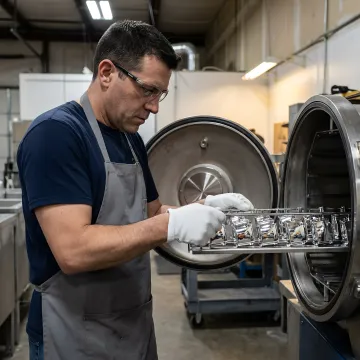
Sputter coating is a physical vapor deposition (PVD) process where material is ejected from a target source (such as stainless steel) through bombardment by energetic ions, typically from an inert gas like argon. The ejected atoms travel through vacuum and deposit as a thin, uniform film on a substrate. This process creates highly adherent, dense coatings with precise thickness control, making it ideal for EMI/RFI shielding, optical coatings, and decorative finishes. Unlike thermal evaporation, sputtering can deposit materials with high melting points and produce alloy films that maintain their composition, ensuring superior performance for electronic and precision applications.
What are the advantages of stainless steel sputtering targets?
Stainless steel sputtering targets offer exceptional corrosion resistance, making them ideal for protective and functional coatings in harsh environments. The alloy composition provides excellent adhesion to diverse substrates including engineered plastics like Ultem, polycarbonate, and nylon. Stainless steel films deliver superior EMI/RFI shielding performance for electronic enclosures and medical devices. The material's uniform composition ensures consistent deposition rates and film properties across production runs. Additionally, stainless steel targets exhibit excellent thermal stability during high-power sputtering, extending target life and reducing replacement frequency compared to pure metals, ultimately lowering your total coating costs.
How do I select the right target size and bonding method?
Target selection depends on your chamber geometry, power density requirements, and production volume. Larger targets generally provide better uniformity and longer service life but require higher-power supplies. Bonding method selection balances thermal management with mechanical requirements: diffusion bonding offers superior thermal conductivity for high-power applications, solder bonding provides good performance for moderate power levels, and elastomer bonding accommodates thermal expansion differences. Our technical team evaluates your specific sputtering parameters—including target-to-substrate distance, chamber pressure, and power density—to recommend optimal target dimensions and bonding approaches that maximize deposition efficiency while maintaining film quality throughout your production runs.
What purity levels are available for stainless steel targets?
We supply stainless steel sputtering targets in multiple purity grades to match your application requirements. Standard industrial-grade targets (99.5% purity) are suitable for decorative and general-purpose coatings. High-purity targets (99.9% or higher) are specified for semiconductor, optical, and medical applications where contamination control is critical. Each target includes certified material analysis documenting chemical composition, trace element levels, and grain structure characteristics. Purity selection should balance performance requirements against cost considerations—higher purity targets command premium pricing but deliver superior film properties and reduced defect rates in critical applications. We help you identify the optimal purity grade based on your specific performance criteria and quality standards.
Can you manufacture custom alloy compositions?
Yes, we specialize in custom stainless steel alloy targets engineered to your exact specifications. Our metallurgical expertise enables us to formulate targets with specific chromium, nickel, molybdenum, and other elemental ratios to achieve desired film properties such as corrosion resistance, hardness, or electrical conductivity. Custom alloys are particularly valuable for proprietary coating formulations or applications requiring specific performance characteristics not achievable with standard stainless steel grades. We work closely with your R&D team during development, providing rapid prototyping and iterative refinement to optimize target composition. Our 60+ years of finishing experience across diverse industries ensures we understand the relationship between target composition and final film performance.
What is your typical lead time for sputtering targets?
Standard stainless steel sputtering targets typically ship within 3-4 weeks from order confirmation. Our in-house custom tooling design and build capabilities enable us to produce targets in half the normal industry lead times—a significant advantage when you're launching new products or responding to urgent production demands. Rush orders for prototype targets can often be accommodated within 7-10 business days. For high-volume production requirements, we maintain inventory management programs that ensure targets are available when you need them, eliminating downtime. Custom alloy compositions or specialized bonding configurations may require additional lead time, which we communicate clearly during the quotation process to set accurate expectations.
How do you ensure target quality and consistency?
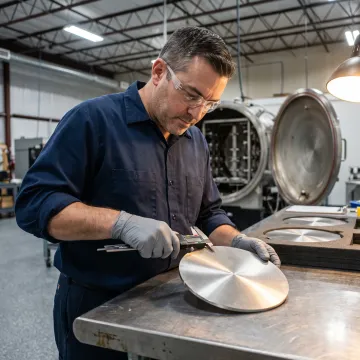
Our quality assurance program encompasses the entire manufacturing process, from incoming material verification through final target inspection. We perform certified chemical analysis, grain structure evaluation, and density measurements on raw materials. During fabrication, we monitor dimensional tolerances using precision measurement equipment, verify bonding integrity through ultrasonic inspection, and assess surface finish quality. Each target undergoes multi-point flatness measurement to ensure optimal contact with magnetron assemblies. Final inspection includes visual examination, documentation review, and performance testing against your specifications. Every target ships with comprehensive quality documentation including material certificates, dimensional inspection reports, and bonding verification data, providing complete traceability for your quality management systems.
Do you offer technical support for deposition optimization?
Absolutely. Our finishing specialists provide comprehensive technical consultation throughout your sputtering project lifecycle. We assist with initial target selection, helping you choose the optimal composition, size, and bonding method for your application. During process development, we offer guidance on power settings, chamber pressure, substrate temperature, and gas flow parameters to achieve desired film properties. If you encounter deposition challenges such as non-uniform coating, poor adhesion, or target arcing, our troubleshooting expertise helps identify root causes and implement corrective actions. With over 60 years of PVD experience across electronic, medical, and industrial applications, we bring proven solutions that accelerate your time to production and optimize your coating quality.