Introduction
Polished nickel and satin nickel share the same base metal — but the similarities stop there. The finish you choose affects durability, maintenance demands, substrate compatibility, and how premium the final product looks in the hands of an end user.
Polished nickel's mirror-like brilliance draws attention — but it also shows every fingerprint and water spot. Satin nickel's brushed, matte surface conceals everyday wear far more effectively.
For manufacturers working with mixed-material assemblies, finish consistency across metal and plastic components is equally critical. A mismatched sheen between substrates can undermine an otherwise well-designed product.
What follows is a practical breakdown of both finishes — how they're made, where each performs best, and how to decide which one fits your application.
Key Takeaways
- Polished nickel delivers a mirror-like, high-gloss finish with warm golden undertones — ideal for luxury and statement applications
- Satin nickel features a low-sheen, matte surface that hides fingerprints and minor scratches, making it more practical in high-traffic environments
- Both finishes rely on electroplating — polished nickel is buffed to a mirror shine, while satin nickel is brushed or lacquered for a softer, muted look
- Polished nickel requires more maintenance; satin nickel is more forgiving in daily use
- The right choice comes down to your aesthetic goals, end-use environment, and production requirements — there's no universal winner
Polished Nickel vs Satin Nickel: Quick Comparison
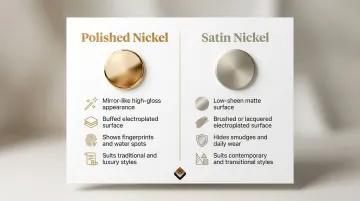
| Factor | Polished Nickel | Satin Nickel |
|---|---|---|
| Appearance | Mirror-like, high-gloss with warm golden undertones | Soft matte sheen with neutral warmth; blends into décor |
| Manufacturing Process | Electroplated nickel, mechanically buffed to a high shine | Electroplated nickel, brushed or lacquered for a muted surface |
| Durability & Maintenance | Durable but shows fingerprints and water spots readily; needs regular polishing | Equally durable; brushed texture hides smudges and daily wear |
| Design Compatibility | Traditional, Victorian, luxury, and transitional interiors | Contemporary, mid-century modern, and transitional styles |
| Cost | Comparable pricing; buffing labor can add slight premiums | Similar cost; price driven by supplier and substrate, not finish type |
What is Polished Nickel?
Polished nickel is a bright, reflective metal finish produced by electroplating a nickel layer over a base metal (typically copper-plated brass or steel) and then mechanically buffing that surface to a mirror-like shine. This finish serves as a premium option in plumbing fixtures, door hardware, cosmetic packaging, and decorative hardware markets where visual impact matters most.
The finish exhibits warm golden undertones that distinguish it from the cooler tone of chrome, creating a "jewel-like" quality that reads as luxurious and refined. Over time, polished nickel can develop a subtle patina as a living finish, adding character. The electroplating process follows ASTM B689 standards.pdf), which governs engineering and testing requirements for electroplated nickel coatings.
Performance characteristics include:
- Strong corrosion and tarnish resistance validated through ASTM B117 salt spray testing
- Excellent hardness and structural integrity
- Heightened susceptibility to fingerprints, water spots, and surface scratches compared to matte alternatives
- Requires regular maintenance to preserve the reflective appearance
Polished nickel is associated with Victorian and traditional design lineage but has seen a modern resurgence as designers seek warm-toned reflective metals to balance brass-heavy interiors. According to 2025 design trend forecasts, mixed metals are a dominant aesthetic direction, with polished nickel serving as a key component in curated, personalized spaces.
Use Cases of Polished Nickel
Polished nickel appears across industries wherever a formal, premium look is required:
- High-end bathroom and kitchen faucets, door hardware, and cabinet pulls
- Light fixture components and architectural hardware
- Cosmetic compacts, fragrance caps, and luxury packaging
- Jewelry, trophy, and tableware finishes
- Hospitality hardware and luxury residential renovation projects
Companies like Kohler position polished nickel as a luxury statement finish, frequently specifying it for high-end plumbing fixtures to create striking focal points.
What is Satin Nickel?
Satin nickel is a low-sheen metal finish produced by electroplating nickel over a copper-plated base substrate. The electroplated layer is then mechanically brushed or lacquer-coated to suppress reflectivity and produce a smooth, matte-like surface texture.
The result is a muted, soft sheen — warm in tone, silky in texture, and free from the high reflectivity of polished nickel. Unlike brushed nickel, satin nickel lacks directional grain lines, giving it a cleaner, more refined appearance.
Modern satin finishes can also be achieved through hydrocarbon emulsions in the nickel bath, creating microscopic surface pits that produce a matte effect without mechanical abrasion.
Performance attributes include:
- Excellent durability and corrosion resistance comparable to polished nickel
- Surface texture that hides fingerprints, water marks, and minor scratches far more effectively
- Lower maintenance burden, making it preferred for high-touch, high-frequency environments
- Better performance under both natural and artificial lighting without glare
Satin nickel's restrained aesthetic works across a wide range of styles — mid-century modern, transitional, and contemporary — and mixes easily with brushed chrome, matte black, and even polished nickel in mixed-metal applications.
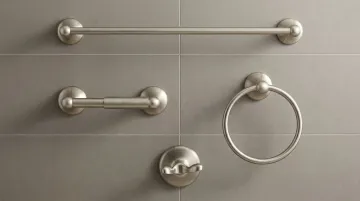
Compared to brushed nickel, satin nickel has a more uniform, refined surface. Brushed nickel shows more visible directional grain and is typically the budget-accessible option at hardware retailers; satin nickel runs finer in texture and slightly warmer in tone.
Providence Metallizing Company applies satin nickel finishes to both metal and plastic substrates — including engineering-grade plastics like Ultem, Nylon, and LCP — allowing manufacturers to achieve consistent finish matching across multi-component products like cosmetic kits, plumbing assemblies, and hardware sets.
Use Cases of Satin Nickel
Primary applications include:
- Bathroom fixtures (towel bars, shower systems, faucets)
- Door hardware and cabinet hardware for kitchens and bathrooms
- Lighting fixtures
- Writing instruments
- Consumer electronics hardware where fingerprint resistance matters
Industries where satin nickel dominates:
- Residential construction and renovation (especially mid-range to upper-mid builds)
- Commercial and hospitality settings requiring low-maintenance hardware
- Cosmetic packaging requiring a refined matte-metallic finish
- Industrial hardware in plumbing, automotive trim, and medical device components
According to hardware selection guides, satin nickel is a dominant choice for door handles, cabinet pulls, and plumbing fixtures in commercial spaces due to its ability to hide fingerprints in high-touch zones.
Polished Nickel vs Satin Nickel: Which Should You Choose?
Five factors drive this decision: sheen preference, maintenance tolerance, design style, application environment, and whether finish consistency across mixed substrates is a production requirement. The situational guidance below maps each factor to a clear recommendation.
Situational Guidance
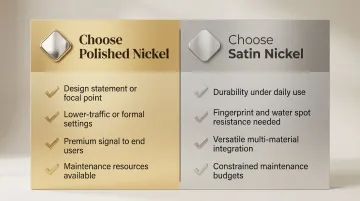
Choose polished nickel when:
- The goal is to make a design statement or create a visual focal point
- The application is lower-traffic or formal (guest bathrooms, decorative hardware, luxury packaging)
- The warm, reflective surface signals premium quality to end users
- Maintenance resources are available to preserve the mirror-like finish
Choose satin nickel when:
- Durability under daily use is paramount
- Fingerprint and water spot visibility must be minimized
- A versatile finish needs to integrate across multiple design styles and materials
- Maintenance budgets are constrained or high-touch frequency makes polished finishes impractical
Mixed-Finish Applications
Polished and satin nickel can be successfully combined in the same space or product when used thoughtfully. For example, specify satin nickel for functional hardware (cabinet pulls, faucets, door handles) and polished nickel for decorative accents (lighting fixtures, mirror frames, statement pieces).
For manufacturers producing multi-part assemblies, matching both finishes across metal and plastic components is a non-trivial challenge. Providence Metallizing Company handles this directly — their plating-on-plastic line and metal finishing capabilities allow teams to hold finish consistency across cosmetic kits, plumbing systems, and hardware sets without sourcing from multiple vendors.
Practical Next Steps
For manufacturers unsure which finish suits their production needs, Providence Metallizing Company offers free sampling for most applications. Teams can evaluate both polished and satin nickel on their actual parts before committing to a full production run.
Contact Providence Metallizing:
Phone: +1 401-722-5300
Email: inquiries@providencemetallizing.com
Conclusion
The choice between polished nickel and satin nickel ultimately comes down to matching the finish to the context. Polished nickel delivers timeless brilliance and warmth suited to elevated, formal, or design-forward applications, while satin nickel offers practical durability and understated elegance across a broader range of everyday environments and design styles. Neither is a universal answer — the right choice depends on the substrate, the environment, and the end customer's expectations.
For product manufacturers, the finish affects how a product looks on shelf, how it holds up in daily use, and how customers perceive its quality. Selecting the right technique for the right substrate is as important as the aesthetic decision itself. Experienced finishing partners — like Providence Metallizing Company, which has applied nickel and specialty finishes across plumbing, hardware, cosmetic, and architectural applications for over 60 years — can help manufacturers specify the right process from the start, avoiding costly rework and inconsistent results.
Frequently Asked Questions
Which is better, polished nickel or satin nickel?
Neither is objectively better — polished nickel suits formal, high-gloss, lower-traffic applications where visual impact matters, while satin nickel is more practical for everyday high-touch use due to its fingerprint and scratch resistance. The right choice depends on your application environment and maintenance budget.
Does satin nickel scratch easily?
Satin nickel is highly durable. Its brushed surface texture helps conceal minor marks, making it appear more scratch-resistant in daily use than polished nickel — even though both finishes share similar underlying hardness.
How does satin nickel compare to polished nickel and brushed nickel in appearance?
Polished nickel is high-gloss and reflective with warm undertones; satin nickel is low-sheen and smooth with a refined matte quality; brushed nickel has a more visible directional grain texture and is generally cooler in tone and more affordable.
Are polished, satin, and brushed nickel finishes in style?
Yes, all three remain popular and are timeless choices. Warm-toned nickel finishes have seen a notable design resurgence as an alternative to chrome and as a complement to brass in mixed-metal interiors trending in 2025-2026.
Which is better, satin nickel or chrome?
Satin nickel is warmer in tone and better at hiding fingerprints, while chrome is cooler, harder, and easier to wipe clean. Chrome is a stronger choice for ultra-modern or minimalist aesthetics; satin nickel works better for transitional or contemporary spaces.
What are the most popular and timeless finishes for faucets and door hardware?
Polished nickel, satin nickel, brushed nickel, polished chrome, and satin brass are consistently popular choices. Satin and polished nickel are particularly versatile — their warm tones hold up across both traditional and contemporary design styles without feeling dated.