Introduction
Jewelry buyers face a familiar frustration: pieces that look stunning in the store lose their luster within months of daily wear. Traditional gold-plated rings fade at contact points, necklaces tarnish from sweat and perfume, and earrings trigger allergic reactions from nickel exposure. These failures stem from the limitations of conventional electroplating—a finishing method that's been the industry standard for decades, despite its inherent weaknesses.
PVD coating offers a different solution—one originally developed for aerospace and medical implants where surface failure isn't an option. Physical Vapor Deposition creates a molecularly bonded finish that outperforms traditional plating in both durability and hypoallergenic safety.
This guide explains what PVD coating is, how the process works, and what jewelry buyers and brands should know when choosing between PVD, electroplating, and gold-filled alternatives.
Key Takeaways
- PVD bonds metal coatings in a vacuum chamber at the molecular level, producing finishes measurably harder and more wear-resistant than electroplating
- Titanium nitride creates warm gold tones, zirconium nitride produces rich yellow-gold, and chromium nitride delivers silver-gray finishes
- PVD is hypoallergenic, ROHS-compliant, and eliminates the toxic chemical baths required by electroplating
- PVD jewelry holds its finish for several years of daily wear — electroplated pieces typically fade within months
What is PVD Coating on Jewelry?
Physical Vapor Deposition is a vacuum-based coating technology where solid metal is vaporized into a plasma of atoms, then condensed onto jewelry surfaces to form an ultra-thin, molecularly bonded layer. Unlike electroplating, which deposits metal through chemical baths, PVD creates a permanent bond at the atomic level.
The technology's credibility comes from its origins outside jewelry. PVD was developed for aerospace components and microelectronics where surface failure carries serious consequences. The same coating method trusted for surgical implants and aircraft parts now gives jewelry exceptional durability.
Providence Metallizing Company pioneered TiN, ZrN, and TiCN PVD methods for jewelry applications in the 1980s, bringing aerospace-grade precision to decorative finishing.
Common PVD Materials and Colors
Three primary coating materials dominate jewelry applications:
- Titanium Nitride (TiN): Warm, classic gold tone — the most widely used PVD finish in jewelry
- Zirconium Nitride (ZrN): Deeper, richer yellow-gold with slightly improved corrosion resistance over TiN
- Chromium Nitride (CrN): Silver-gray metallic appearance suited to contemporary and industrial designs
Titanium carbonitride (TiCN) achieves deeper bronze and rose gold finishes. These colors result from the specific compounds formed during deposition, not from dyes that can fade.
Substrate Requirements
PVD is applied over a base substrate—typically 316L stainless steel or titanium for jewelry. The quality of both substrate and coating process determines final results. According to industry documentation, materials with low vapor pressures at elevated temperatures make optimal PVD candidates, which is why stainless steels and nickel alloys excel as base materials.
Critical Distinction from Gold Plating
PVD is not traditional gold plating with a different name. The molecular adhesion created by PVD far exceeds the mechanical and chemical bonding of electroplating. The hardness numbers tell the real story:
| Coating Type | Surface Hardness (HV) |
|---|---|
| PVD coating | 800–2,000 HV |
| Gold electroplate | 100–200 HV |
That hardness gap translates directly to scratch resistance and long-term wearability.
How PVD Coating Works: Step by Step
Step 1 — Surface Preparation
Before entering the vacuum chamber, jewelry substrates undergo thorough cleaning using ultrasonic cleaning followed by vacuum drying. Any surface contamination—oils, residues, or debris—directly compromises coating adhesion. Even microscopic residue can cause the coating to delaminate under wear, making this step as consequential as the deposition itself.
Step 2 — Vacuum Chamber Loading and Evacuation
Cleaned pieces are loaded into a sealed vacuum chamber, and air is evacuated to create near-perfect vacuum conditions (10⁻⁶ torrs). This vacuum environment prevents atmospheric gases from contaminating the plasma and ensures deposited atoms bond uniformly across all surfaces.
Step 3 — Vaporization and Deposition
Two primary PVD methods serve jewelry manufacturing:
Magnetron Sputtering uses high-energy ions to bombard the target metal, ejecting atoms that travel through the vacuum and deposit on jewelry surfaces. This method delivers precise, uniform coatings without heat-related distortion. Research shows sputtering avoids the "macro particle" problem that can reduce reflectivity in decorative applications.
Cathodic Arc Deposition uses an electric arc to vaporize target material, creating highly ionized plasma that bonds aggressively to substrate surfaces. While effective, this method can generate molten metal droplets that may affect surface smoothness on decorative pieces.
Regardless of method, reactive gases introduced during deposition determine the final color. Titanium reacting with nitrogen forms the gold-colored TiN compound; zirconium with nitrogen creates champagne-toned ZrN. Oxygen and methane produce additional color variants across the spectrum.
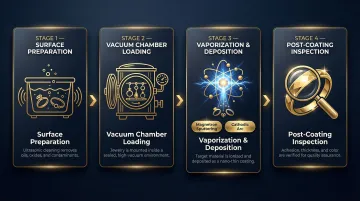
Step 4 — Post-Coating Inspection and Quality Control
Finished pieces are inspected for uniformity, adhesion, and color consistency. Coating thickness—typically 0.1 to 1.0 microns for decorative applications—directly affects long-term durability. Finishing operations running high-volume production, like Providence Metallizing Company's PVD lines, maintain tight tolerances to ensure color and adhesion consistency across thousands of pieces per run.
PVD Coating vs. Traditional Plating vs. Gold-Filled: A Clear Comparison
Traditional Electroplating Explained
Electroplating submerges jewelry in chemical baths containing dissolved metal ions. Electric current drives those ions onto the surface, but the resulting bond is weak and the coating thin. The process also relies on hazardous chemicals, including cyanide-based solutions. The EPA classifies spent cyanide plating solutions as hazardous waste F007, requiring expensive disposal protocols.
Durability Head-to-Head
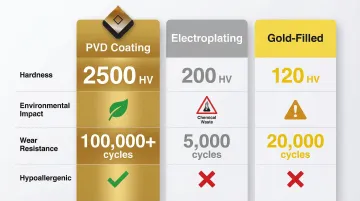
Comparative testing puts the difference in plain numbers: traditional gold plating samples showed significant wear and base metal exposure after 500 abrasion cycles, while PVD-coated samples maintained complete shine after 5,000 cycles with no visible scratches. The molecular bond created by PVD makes coatings measurably harder and more scratch-resistant than electroplated layers.
That hardness advantage shows up in surface measurements, too. PVD coatings achieve 800-2000 HV depending on target material composition, while traditional gold plating measures just 100-200 HV. For daily-wear jewelry, this difference means PVD finishes maintain integrity for years where electroplate begins degrading within months.
Gold-Filled Jewelry
Gold-filled is a third category entirely. It involves a thick layer of karat gold mechanically bonded through heat and pressure over a brass core. U.S. regulations require gold-filled items contain at least 1/20th gold by weight.
While more durable than standard electroplating, gold-filled pieces can still tarnish under daily exposure to sweat and water. If the gold layer wears through, the brass core may cause skin reactions.
Environmental and Safety Differences
PVD is a dry, vacuum-based process that produces zero liquid chemical waste and no toxic byproducts. Electroplating generates hazardous wastewater containing cyanides and heavy metals — treatment requires specialized infrastructure and carries ongoing disposal costs. PVD coating is RoHS compliant, which matters for jewelry brands selling into regulated markets.
Quick Comparison
| Feature | PVD Coating (TiN/ZrN) | Electroplating | Gold-Filled |
|---|---|---|---|
| Hardness | 800-2000 HV | 100-200 HV | ~140 HV |
| Environmental Impact | Zero hazardous waste | Toxic chemical baths | Moderate impact |
| Wear Resistance | 5,000+ cycles | 500 cycles | 10-30 years |
| Hypoallergenic | Yes (biocompatible) | Often contains nickel | Depends on wear-through |
Key Benefits of PVD Coating for Jewelry
Durability and Scratch Resistance
The molecularly bonded PVD layer creates surfaces harder than the base metals underneath. This hardness resists everyday abrasion, sweat, perfume, and moisture exposure that causes traditional plated jewelry to fail. For pieces intended for daily wearsuch as rings, bracelets, and watches, PVD delivers the durability customers expect but rarely get from conventional finishes.
Hypoallergenic Safety
PVD coating materials are FDA-cleared for surgical implants and pass ISO 10993 biocompatibility standards. TiN and ZrN are chemically inert compounds that don't trigger allergic reactions. Combined with nickel-free stainless steel or titanium bases, PVD jewelry provides reliable options for consumers with metal sensitivities. For brands, that's a concrete product claim backed by medical-grade testing standards.
Color Versatility and Finish Quality
Unlike electroplating, which is limited to deposited metal colors, PVD achieves diverse finishes through target material selection and reactive gas combinations. Finishes are smooth, consistent, and hold their luster far longer than plated alternatives. Providence Metallizing Company applies this range across production runs, offering clients more than 30 distinct finishes on both metal and plastic substrates.
Common PVD finish options include:
- Gold and rose gold tones
- Black and gunmetal
- Silver-gray and brushed stainless effects
- Specialty reactive-gas colors (bronze, copper, blue-tinted)
How Long Does PVD Coating Last? Durability and Care Tips
Honest Durability Expectations
With proper care, high-quality PVD-coated jewelry maintains its finish for several years of daily wear. Longevity depends on base material quality, PVD layer thickness and uniformity, and how pieces are used and stored. Salt spray testing shows PVD withstands 100-500+ hours without oxidation, while standard gold plating develops spots within 24-48 hours.
Addressing Tarnish and Wear
PVD coatings do not tarnish the way electroplated or gold-filled jewelry does because coating materials are chemically inert. However, PVD can show wear at high-friction contact points—inner ring bands, watch case backs—after years of heavy use. This is physical abrasion, not chemical degradation or tarnishing. That means how you store and clean PVD pieces has a direct impact on how long the finish holds up.
Practical Care Guidance
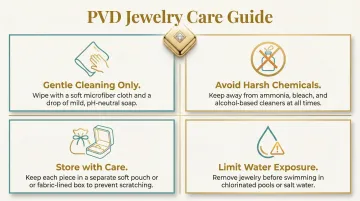
To maximize PVD coating lifespan:
- Clean with soft microfiber cloth and mild soapy water
- Avoid abrasive cleaners and harsh chemicals (ammonia, bleach)
- Store separately in soft pouches or lined boxes to prevent scratching
- Minimize prolonged exposure to chlorinated pools, hot tubs, and salt water
Can You Shower with PVD-Coated Jewelry?
Brief water exposure is generally fine. However, regular contact with chlorinated water, soaps, and shampoos should be minimized—repeated friction from lathering and rinsing accelerates wear at contact points over time.
Frequently Asked Questions
What is PVD coating on jewelry?
PVD (Physical Vapor Deposition) is a vacuum-based process that bonds hard, thin metal coatings to jewelry at the molecular level, resulting in finishes more durable, tarnish-resistant, and hypoallergenic than traditional electroplating.
Is PVD gold better than gold-plated?
Yes. PVD gold outperforms standard gold plating in durability, scratch resistance, and lifespan because the bond is molecular rather than electrostatic, and the resulting surface is significantly harder (800-2000 HV vs. 100-200 HV).
What are the pros and cons of PVD coating for jewelry?
PVD coating offers clear advantages for most jewelry applications:
- Exceptional scratch resistance and long-term durability
- Hypoallergenic finish suitable for sensitive skin
- Wide color range with consistent, tarnish-resistant results
- Eco-friendly process with no hazardous waste byproducts
The main drawbacks are higher upfront cost compared to electroplating and the inability to re-apply the coating at home.
How long does PVD coating last on jewelry?
PVD-coated jewelry typically lasts 3–5+ years of daily wear, far outlasting most electroplated pieces. Longevity depends on substrate quality, coating thickness, and how the piece is cared for.
Can you PVD sterling silver?
Stainless steel and titanium are the preferred substrates for PVD coating — they bond more reliably and are naturally hypoallergenic. Sterling silver is possible but problematic; its reactivity can interfere with the vacuum bonding process and typically requires a barrier layer to get acceptable adhesion.
Can you shower with PVD-coated jewelry?
Occasional water exposure — like hand-washing — is acceptable for PVD-coated jewelry. However, regular contact with chlorinated or salt water, soaps, and shampoos should be minimized to prevent gradual coating abrasion over time.