How thick is thin dense chrome plating?
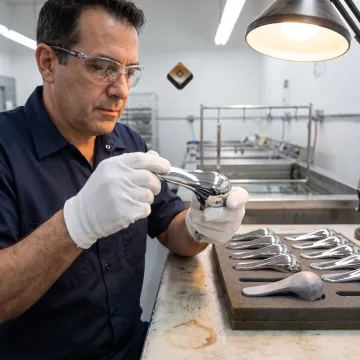
Thin dense chrome plating typically ranges from 0.0002 to 0.002 inches (0.005 to 0.05 mm) in thickness, depending on the application requirements. Our advanced electroplating systems can precisely control deposit thickness to meet your exact specifications. For industrial applications requiring maximum hardness and wear resistance, we typically apply 0.0005 to 0.001 inches. For decorative applications, thinner deposits of 0.0002 to 0.0005 inches provide excellent corrosion protection and brilliant appearance while maintaining dimensional tolerances on precision components.
What materials can receive thin dense chrome plating?
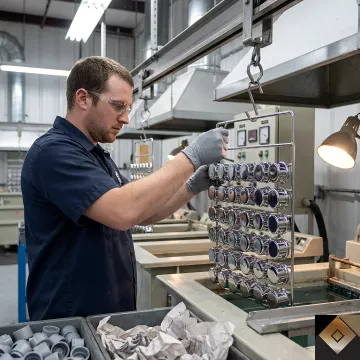
We apply thin dense chrome plating to a wide range of metal substrates including steel, stainless steel, brass, aluminum, and copper alloys. Additionally, our industry-leading plating-on-plastic systems can chrome plate engineering-grade plastics such as ABS, polycarbonate, Ultem, Nylon, and LCP. Before plating, metal parts undergo degreasing and activation, while plastic substrates receive our proprietary pre-treatment using advanced plasma or chemical etching to ensure superior adhesion. This versatility allows us to match chrome finishes perfectly across metal and plastic components in the same assembly.
What industries use thin dense chrome plating?
Thin dense chrome plating serves demanding applications across medical device manufacturing, electronic component production, precision hardware, plumbing fixtures, automotive parts, and architectural hardware. Medical and electronic industries particularly value chrome's biocompatibility, electrical conductivity, and corrosion resistance. Plumbing and hardware manufacturers rely on decorative chrome for its brilliant appearance and durability. Our approved supplier relationships with global brands demonstrate our capability to meet the strictest quality standards across diverse industries requiring consistent, high-quality chrome finishes.
How long does the chrome plating process take?
Our streamlined electroplating process with in-house custom tooling design moves parts from sampling to production in half the normal industry lead times. For standard production runs, typical turnaround is 5-10 business days depending on part complexity, quantity, and finish specifications. Rush services are available for urgent requirements. We operate 24-5 with over 200,000 sq.ft. of production capacity, allowing us to handle high-volume orders while maintaining fast turnaround. Free sampling is available for most applications, typically delivered within 3-5 business days.
What quality standards do your chrome finishes meet?
Our thin dense chrome plating meets or exceeds European quality standards and industry specifications including ASTM B177 for decorative chrome and AMS 2460 for functional chrome plating. Every batch undergoes comprehensive testing including thickness measurement, adhesion testing, salt spray corrosion testing, and hardness verification. We maintain approved supplier status with Estée Lauder, L'Oreal, Avon, and Elizabeth Arden, demonstrating our capability to meet the most demanding quality requirements. Our ROHS-compliant processes ensure environmental compliance for all markets.
Can you match chrome finishes on metal and plastic parts?
Yes, matching chrome finishes across metal and plastic components is one of our core competencies. We developed the most consistent and flexible plating-on-plastic line in the industry, capable of producing over 30 different finishes on plastic substrates that precisely match corresponding metal finishes. This is critical for electronic, medical, plumbing, and hardware applications where seamless appearance across mixed materials is required. Our advanced pre-treatment and plating systems ensure identical color, gloss level, and texture whether the substrate is metal or engineering-grade plastic.
What is the difference between decorative and functional chrome plating?
Decorative chrome plating emphasizes brilliant mirror-like appearance and corrosion resistance for architectural hardware, plumbing fixtures, and consumer products. It typically uses thinner deposits over nickel undercoats. Functional or thin dense chrome plating prioritizes hardness, wear resistance, and dimensional precision for industrial applications like medical devices, precision tooling, and electronic components. Functional chrome uses thicker deposits applied directly to properly prepared substrates. We excel at both applications, with our systems providing superior adhesion, consistency, and the ability to meet specific performance requirements for your application.
Do you offer sample plating before production runs?
Yes, we provide free sampling services for most customers and applications to verify finish appearance, adhesion, and compatibility with your assembly processes. Our rapid sampling capability, supported by in-house custom tooling design and build, allows us to produce representative samples quickly—typically within 3-5 business days. This enables you to evaluate our European-quality chrome finishes, verify dimensional accuracy, and conduct your own performance testing before committing to production. Our engineering team works closely with you during sampling to optimize the finish for your specific requirements.