What is ZrN coating good for?
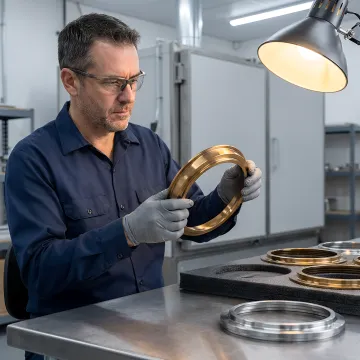
Zirconium Nitride (ZrN) coating excels in applications requiring superior corrosion resistance, high hardness, and decorative golden appearance. It's ideal for medical instruments due to biocompatibility, cutting tools for extended wear life, watch components and jewelry for scratch resistance, and electronic connectors for electrical conductivity. ZrN outperforms TiN in corrosive environments and maintains stability at elevated temperatures, making it valuable for injection molds, stamping dies, and precision hardware exposed to chemical agents.
What is the difference between ZrN and ZrCN coatings?
Zirconium Carbo-Nitride (ZrCN) incorporates carbon into the coating structure, achieving even greater hardness than standard Zirconium Nitride (ZrN) while maintaining excellent corrosion resistance. ZrCN typically reaches hardness values of 3000-3500 HV compared to ZrN's 2500-3000 HV. This makes ZrCN superior for extreme wear applications like high-speed machining, abrasive plastic molding, and metal forming operations. Both coatings offer the characteristic golden-bronze appearance and biocompatibility, but ZrCN provides enhanced performance in the most demanding industrial environments.
Can ZrCN coatings be applied to plastic substrates?
Yes, Providence Metallizing specializes in applying ZrCN coatings to engineering-grade plastics including Ultem, Polycarbonate, Nylon, and LCP using advanced magnetron sputtering technology. Our proprietary plasma pretreatment ensures excellent adhesion without embrittling the substrate, maintaining the material's flex and springback properties. This capability is critical for hybrid assemblies in medical devices, electronic housings, and precision hardware where metal and plastic components require matching wear resistance and aesthetic finishes. We've successfully coated functional plastic parts requiring both decorative appearance and engineering-grade durability.
How long does the ZrCN coating process take?
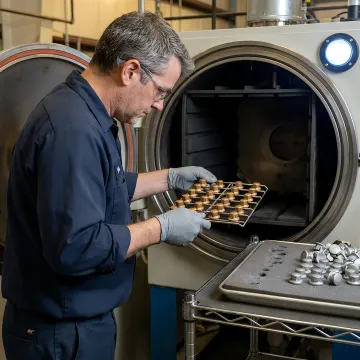
Typical ZrCN coating turnaround ranges from 5-10 business days depending on part complexity, substrate material, and production volume. Our 200,000+ square foot facility and dedicated PVD equipment enable us to complete projects in half the normal industry lead time. For urgent requirements, we offer expedited processing through our 24-5 operational schedule. Free sampling services allow customers to evaluate coating performance before committing to production runs, typically delivered within 3-5 business days for standard geometries and materials.
What industries benefit most from ZrCN coatings?
ZrCN coatings deliver critical performance advantages for medical device manufacturers requiring biocompatible, sterilization-resistant surfaces; electronics producers needing wear protection on connectors and housings; precision tool manufacturers seeking extended die and mold life; automotive suppliers requiring corrosion resistance on functional components; and hardware producers demanding durable decorative finishes. The coating's combination of extreme hardness, corrosion resistance, and aesthetic appeal makes it valuable wherever components face abrasive wear, chemical exposure, or thermal cycling while maintaining appearance standards.
How durable are ZrCN coatings compared to other PVD finishes?
ZrCN ranks among the hardest PVD coatings available, typically exceeding Titanium Nitride (TiN) and standard Zirconium Nitride (ZrN) in both hardness and wear resistance. Coating hardness ranges from 3000-3500 HV with excellent adhesion to properly prepared substrates. ZrCN maintains its protective properties through repeated thermal cycling, chemical exposure, and mechanical stress. In abrasive wear testing, ZrCN-coated tooling demonstrates 2-4 times the service life of uncoated components. The coating's dense, defect-free structure provides superior barrier protection against corrosion in salt spray and chemical environments.
What is the typical thickness of ZrCN coatings?
Standard ZrCN coating thickness ranges from 1-5 microns depending on application requirements. Thinner coatings (1-2 microns) suit precision components where dimensional tolerances are critical, such as medical instruments and electronic connectors. Thicker applications (3-5 microns) provide maximum wear protection for tooling, molds, and high-cycle mechanical components. Our controlled deposition process maintains uniform thickness across complex geometries with thickness variation typically within ±10%. Coating thickness is verified using calibrated measurement equipment to ensure specification compliance for every production run.
Does Providence Metallizing offer custom ZrCN coating specifications?
Absolutely. Our 60+ years of finishing innovation and in-house PVD engineering expertise enable us to customize ZrCN coating parameters for specific performance requirements. We adjust process variables including deposition temperature, gas composition, bias voltage, and coating architecture to optimize hardness, adhesion, internal stress, or color appearance. Our dedicated tooling design and build capability allows rapid development of custom fixturing for complex part geometries. Free sampling services let customers evaluate customized coating performance before production commitment, with technical consultation throughout the development process.